EV Charging Cost Calculator Guide
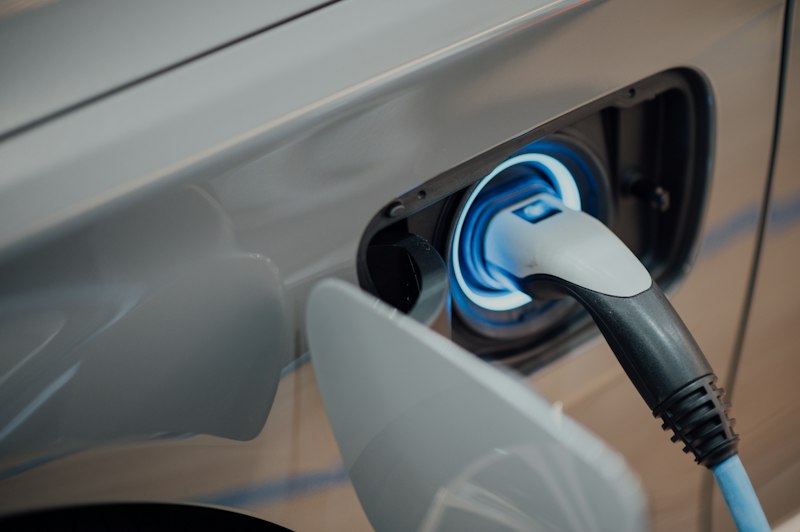
Electric vehicles are becoming increasingly popular, with EV sales growing over 40% year-over-year and more affordable models entering the market. One of the biggest advantages of EV ownership is dramatically lower fueling costs compared to gasoline vehicles. On average, EV drivers save $800-1,500 per year on fueling costs, and when you factor in reduced maintenance (no oil changes, fewer brake repairs), total savings over the vehicle's lifetime can exceed $10,000. Our EV Charging Cost Calculator helps you compare the cost of charging an EV versus fueling a gas car based on your specific driving habits and local rates.
Home Charging vs. Public Charging Costs
Home charging is by far the most affordable option for EV owners, typically costing $0.04-0.08 per mile or $0.10-0.20 per kWh. At the US average electricity rate of 14 cents/kWh, a full charge for a 60-82 kWh battery costs $8-12 and provides 200-300 miles of range. Installing a Level 2 home charger adds $500-2,000 but reduces charging time from 40-60 hours (Level 1) to 6-10 hours (Level 2) for a full charge. Public charging costs significantly more — Level 2 public chargers average $0.20-0.35/kWh, and DC fast chargers range from $0.25-0.50/kWh. Tesla Superchargers cost approximately $0.25-0.35/kWh. A full charge at a public DC fast charger can cost $20-50 for a large battery. Many employers and retail locations offer free Level 2 charging as a benefit, which can reduce your fueling costs to zero for a portion of your driving.
The True Cost of EV Ownership
While EVs typically cost $5,000-15,000 more upfront than comparable gas cars (though prices are converging rapidly), the total cost of ownership often favors EVs when fuel and maintenance savings are factored in. EVs have approximately 40% fewer moving parts than internal combustion engines, eliminating oil changes, timing belts, and exhaust system repairs. Regenerative braking dramatically extends brake pad life to 100,000+ miles. The federal EV tax credit of up to $7,500 (income and price limits apply) and various state incentives can significantly reduce the upfront premium. EV batteries are warranted for 8-10 years or 100,000 miles and typically last 200,000+ miles before needing replacement. When you combine fueling savings of $800-1,500 per year with maintenance savings of $300-600 per year, the total cost of EV ownership is now competitive with or lower than gas cars for most drivers, especially those who can charge at home.
Optimizing Your EV Charging Strategy
To minimize charging costs, charge at home overnight whenever possible — many utilities offer EV-specific time-of-use rates as low as 8-10 cents/kWh during off-peak hours. Sign up for charging network membership programs (EVgo, Electrify America, Tesla) for 15-25% discounts on public charging rates. Use free workplace or retail charging when available. Plan road trips around Tesla Superchargers or other DC fast charger networks using apps like PlugShare, A Better Routeplanner, or the car's built-in navigation. Charge to 80% for daily driving and only charge to 100% for long trips to preserve battery health. Pre-condition your battery while still plugged in during cold weather to improve charging speed and efficiency. Consider installing solar panels to offset your home charging costs entirely, reducing your effective fueling cost to near zero.
Worked Example: The Default Scenario in Dollars
Run the calculator with its US defaults — a 60 kWh battery, 14 cents per kWh, home charging, 250 miles driven per week, a 25 mpg gas car, and $3.50 per gallon — and the comparison writes itself out line by line. Annual mileage is 250 × 52 = 13,000 miles. On home power the calculator divides the 14 cent rate by its 3.5 miles-per-kWh efficiency assumption to get a cost per mile of about 4 cents, so your annual charging bill is 13,000 × $0.04 = $520. One full charge of the 60 kWh pack costs 60 × $0.14 = $8.40.
The same car on gasoline tells the opposite story. At $3.50 per gallon and 25 mpg, the gas cost per mile is $3.50 ÷ 25 = 14 cents, and the annual fuel bill is 13,000 × $0.14 = $1,820. Subtract the $520 electric total and the calculator reports $1,300 in annual savings, or about $108 per month — roughly the cost of two full gas tanks. That gap is the heart of the EV ownership case: identical driving, dramatically different fuel bills.
Now change only the charge location to public and watch the savings narrow. Public rates are modeled as 2.5 times the home rate, so the effective price becomes 35 cents per kWh. Cost per mile rises to 10 cents and the annual charging bill to $1,300, cutting the savings to $520 per year. The mixed option splits the difference, applying an effective rate of 24.5 cents and landing near $910 annually. This is the practical insight the tool is built around: home charging preserves most of the savings, so if you cannot charge overnight, the financial advantage shrinks even though it rarely disappears entirely.
Related Calculators
Compare EV vs gas driving costs with our Fuel Cost Calculator. Estimate your home electricity usage for charging with the Electricity Cost Calculator. Plan your EV purchase budget with the Car Loan Calculator.
Keywords: EV charging cost, electric vehicle charging calculator, EV vs gas cost, charging cost comparison, electric car savings, home EV charging, public charging cost, cost to charge EV, EV fuel savings, electric vehicle cost per mile, Tesla charging cost
Written by the CalcMaster Pro Editorial Team — financial, health, and DIY tools reviewed for accuracy. All calculators run on standard, widely accepted formulas. Always confirm final numbers with a qualified professional for decisions that require official figures.